AI Is the Unit Drive of Our Era
The firm is a factory for decisions and deliverables. Bolting a new engine onto the old org chart is exactly what the mills did in 1890, and it cost them forty years.
by Daniel Ormsbee, Founder - MapReality
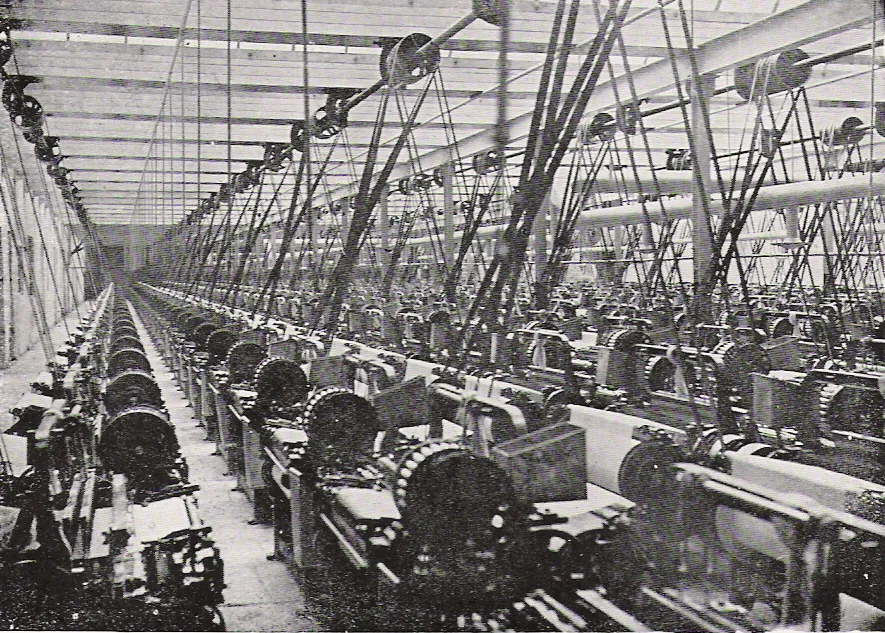
You are walking through a factory in 1880. One engine turns a shaft the length of the building. Leather belts slap and sing from that shaft to every machine on the floor. The mill is a cathedral built around a single rotating bone, fed by an engine of bristling fire, chuffing smoke, brimstone and cold steel. You do not place a lathe where the work wants it. You place it where the belt can reach. The product, cloth, a casting, a bolt of steel, is almost incidental. The architecture of the plant, the factory of your livelihood, answers to one thing: the power in its shaft and belts. That is the central lifeforce of the mill.
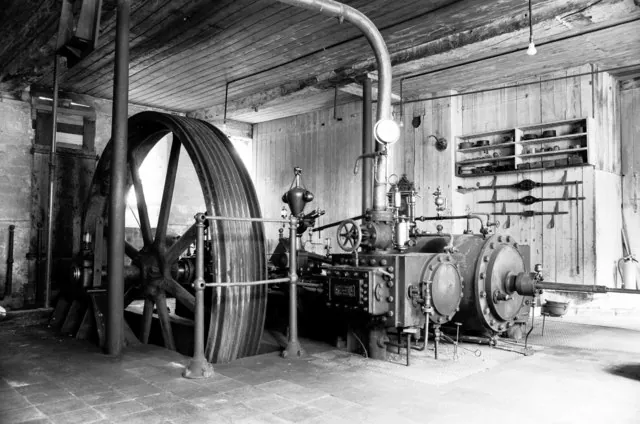
Electricity arrives in your mid-thirties, and for a generation almost nothing happens. Things go on as normal. Engineers you know build electric motors to replace the steam engines that powered your father’s factory, but the architecture of the textile mill barely changes.
You watch them do the reasonable thing. They set the new motor, gleaming with copper windings and silent in its action, exactly where the steam engine stood, and they run the shaft off it. A new engine turns the same old bone. The belts still dictate every aisle you walk, and the building still rises in stories because gravity and leather require it. You work the same floor your father worked.
A century later, Paul David named the wait for what it was: not a failure of the dynamo, but a failure of imagination and skill. A failure of society’s collective consciousness amid the immaturity of a novel tool. Productivity slept for roughly forty years because the factory kept its old topology. The constraint had vanished, but the layout lagged behind.
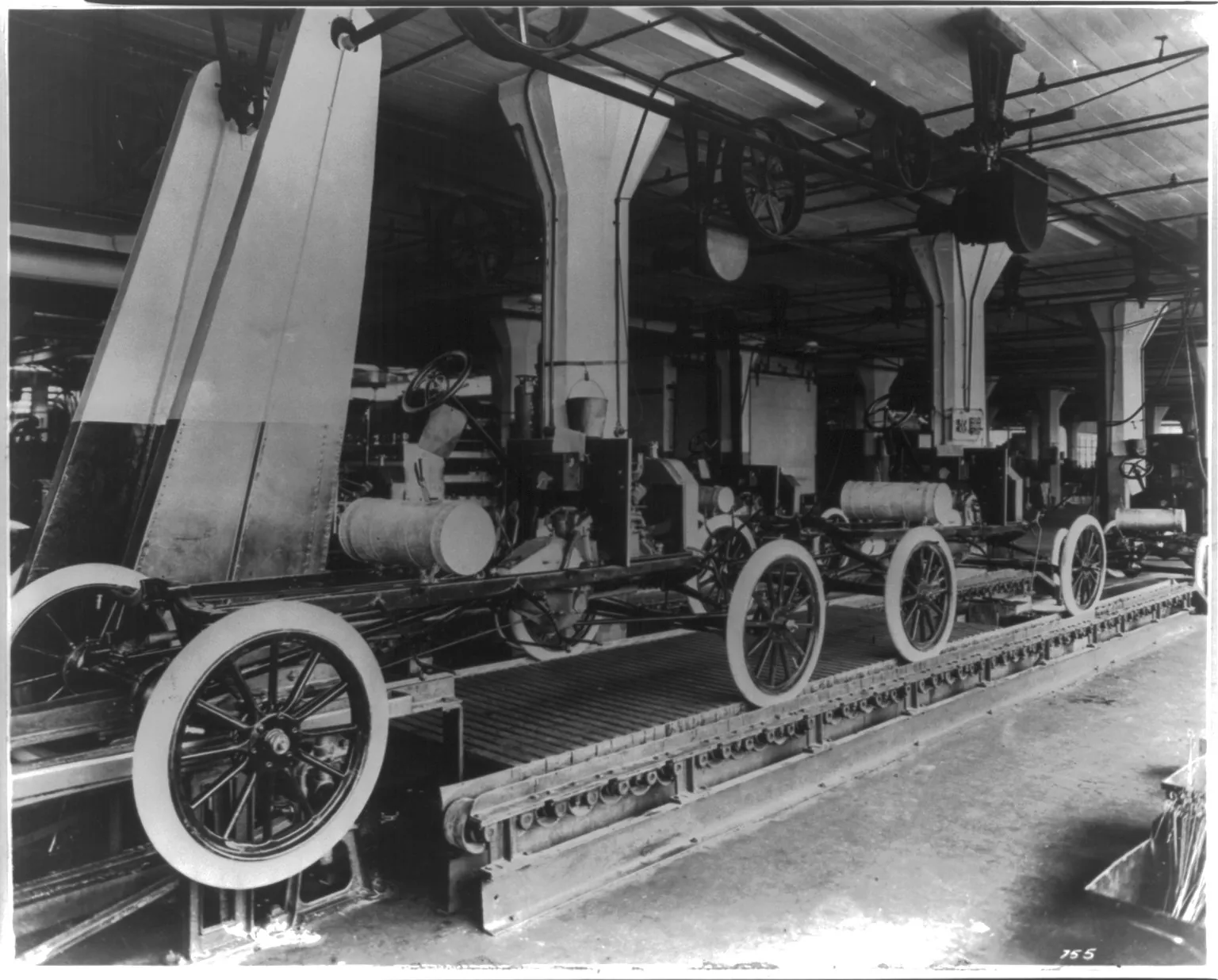
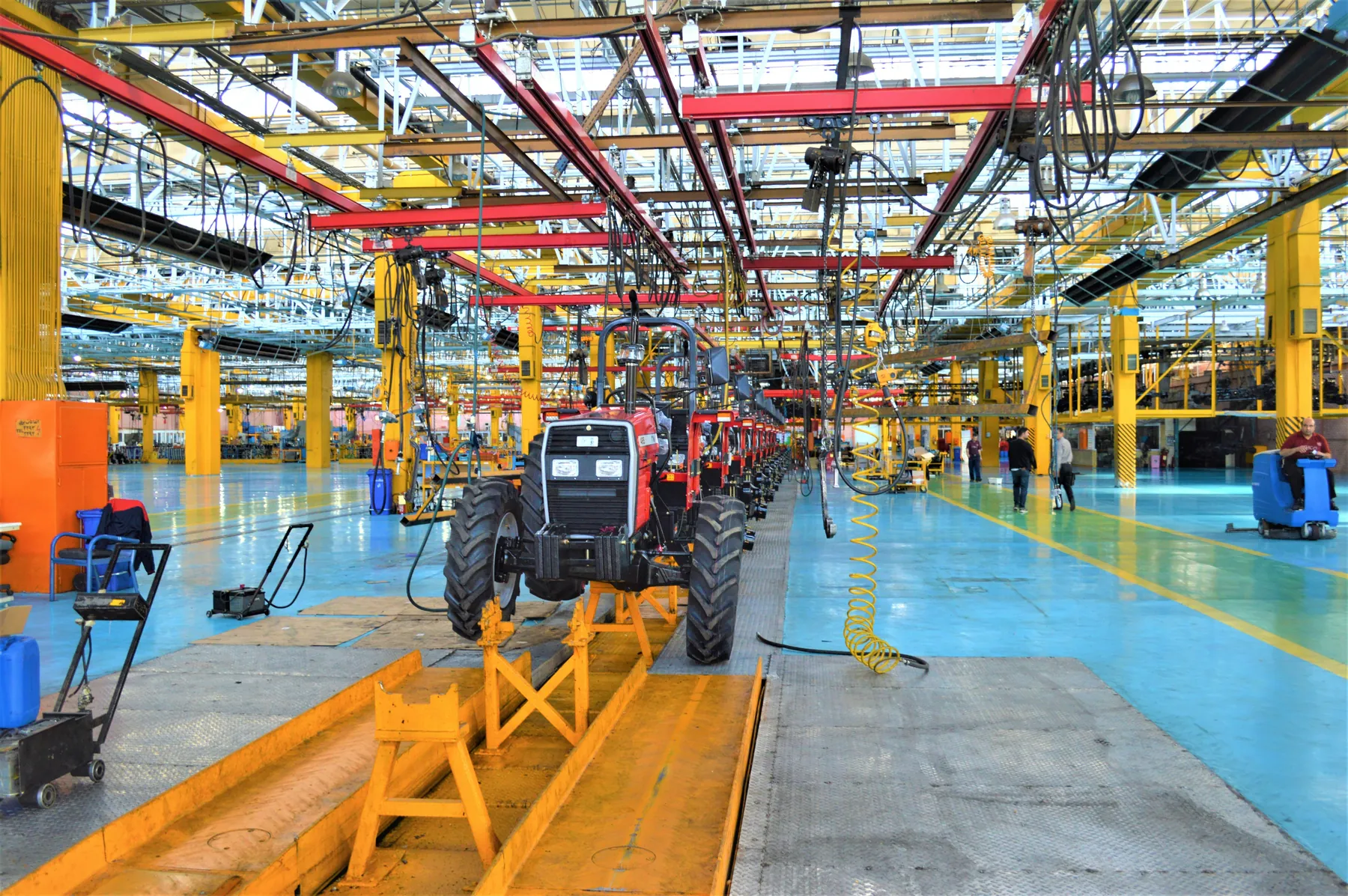
In your fifties, a man bolts a motor to a single machine. Then another. The shaft goes silent. The belts come down. Suddenly the mill can be a single story, light, modular, arranged around the path of the work instead of the path of the power. By the time you are old and retired, Ford’s line does not invent a new product. It invents a new geometry. It redraws the layout of your father’s mill. Cloth still walks in. Cloth still walks out. Between them, your world has been rebuilt.
The firm is the mill
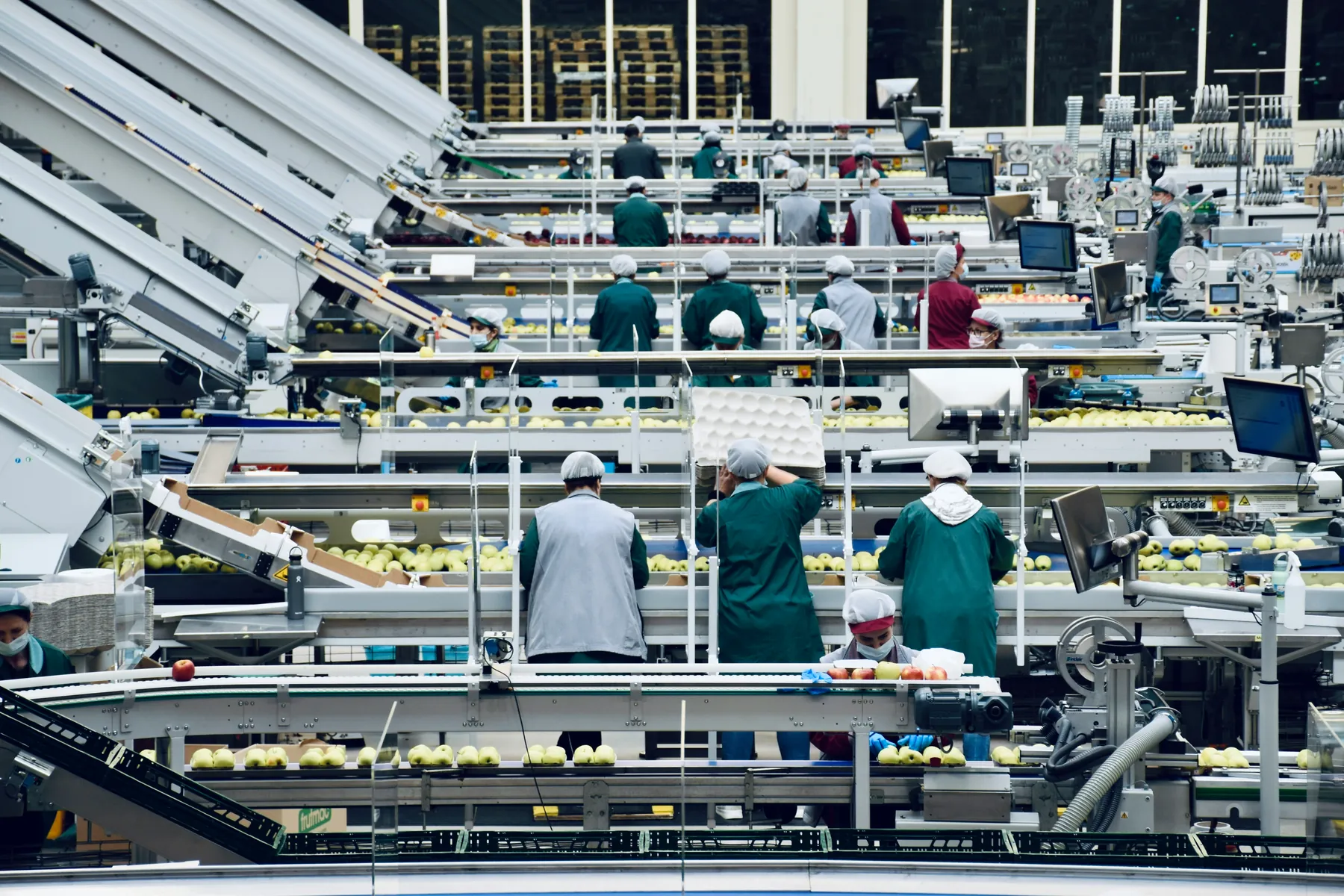
The twenty-first-century firm is a factory for decisions and deliverables. Customers still want taxes filed, contracts written and reviewed, capital projects designed and commissioned, trades placed and monitored, deals vetted and invested, capital stewarded and deployed. Crude still becomes gasoline. Those terminal inputs and outputs do not move because AI has entered the building. What AI cheapens is the path between them, and the operation of the organization that manages the path’s traversal. That path is the intermediate labor of language, calculation and coordination that used to justify whole departments as necessary stations.
Dropping ChatGPT into today’s org chart is the trick your grandfather watched in 1890: a dazzling new engine, still turning the old bone. The org chart is your shaft and your leather belt. It was designed around the limits of human work the way the mill was designed around the cost of mechanical transmission.
Figure 03One firm
Topology: radically reorganized
GTM, legal and finance are the unit operations. Three states of the same firm, same clients in, same revenue out.
01Divisions
12 humans
Managers gate the work and run a network of knowledge workers.
Twelve people. In each department a manager takes the work in, spreads it across three knowledge workers, and gates what leaves. Between client and revenue the work crosses three departments, and a manager signs off at every one.
02The chain
3 managers
Managers gate and review agentic work.
Three people. The workers in each department are replaced by one agent that does the production. The manager stays, still gating and reviewing. The same three gates, a quarter of the headcount, and the shape of the firm has not changed.
03The control room
2 operators
Operators monitor the system. The gates are automated.
Two people. The gates are automated and the three agents run as one line, client to revenue. The operators sit above the line rather than inside it, watching the whole system and stepping in on exception. This is the mill after the unit drive.
- Worker
- Manager
- Agent
- Unit of work
- Unit operation
The bottleneck is the cadre
Paul David’s missing piece was not the motor. It was “a cadre of experienced factory architects and electrical engineers.” The bottleneck is the same now as it was then. The tools exist. The people who can design and operate the new architecture, who can move finance, legal, go-to-market and support off the factory floor and into a control room, do not. Not yet, and not in numbers. Erik Brynjolfsson, Daniel Rock and Chad Syverson later named the accounting of this wait: a J-curve, in which the reorganization looks, for a time, like a productivity drain.
The inputs don’t change. The paths between them do. Our great-grandparents watched the mills of the 1880s collapse into the manufacturing floors of the 1900s. We are standing at the same hinge.
So what do these digital refineries look like? Who is going to build and operate them?
That’s the next essay.
Sources
- David, P. A. (1990). “The Dynamo and the Computer: An Historical Perspective on the Modern Productivity Paradox.” American Economic Review 80(2), 355–361.
- Brynjolfsson, E., Rock, D., & Syverson, C. (2021). “The Productivity J-Curve: How Intangibles Complement General Purpose Technologies.” American Economic Journal: Macroeconomics 13(1), 333–372.